
Shipping Container Guide
A Complete Guide to Shipping Container Types, Sizes & Uses
Shipping containers are the backbone of global trade. From everyday consumer goods to temperature-sensitive pharmaceuticals and heavy machinery, containers enable safe, efficient, and standardized cargo movement across sea, land, and rail. Choosing the right container type is critical for cost efficiency, cargo safety, and smooth logistics operations.
In this guide, we break down the most commonly used shipping container types, their sizes, and practical applications to help businesses make informed shipping decisions.
Dry Cargo Containers
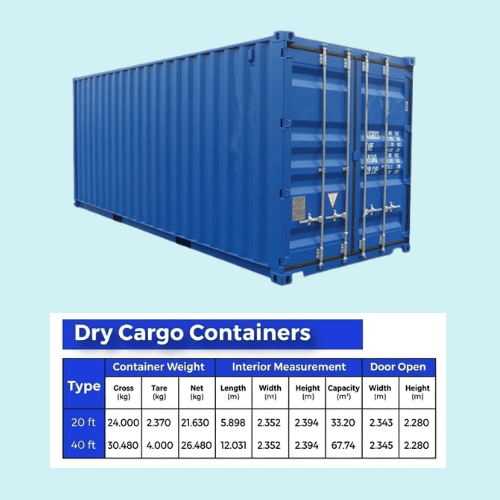
Dry cargo containers are the most commonly used container type in the shipping industry. These containers are fully enclosed, weather-resistant, and suitable for transporting general cargo that does not require temperature control. Available in standard sizes such as 20-foot and 40-foot units, dry containers are widely used to ship consumer goods, electronics, furniture, textiles, machinery parts, and packaged non-perishable items. Their versatility, availability, and cost-effectiveness make them the preferred choice for a wide range of industries involved in international trade.
Refrigerated Containers
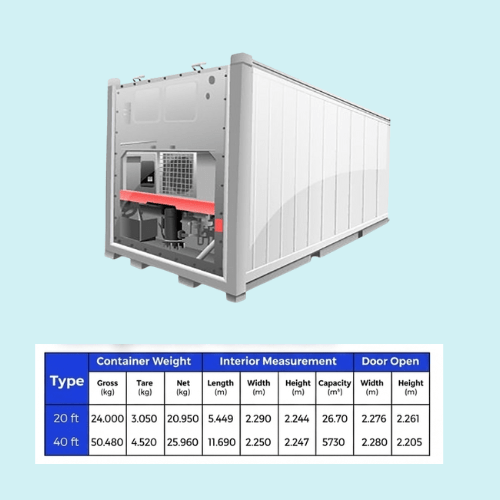
Refrigerated containers, commonly known as reefer containers, are specifically designed to transport temperature-sensitive cargo. These containers are equipped with advanced cooling systems that maintain a consistent internal temperature throughout the journey. Reefer containers are essential for shipping perishable goods such as fresh fruits, vegetables, meat, seafood, dairy products, pharmaceuticals, and frozen food items. By maintaining precise temperature control, refrigerated containers help preserve product quality, extend shelf life, and minimize the risk of spoilage during transit.
Open Top Containers
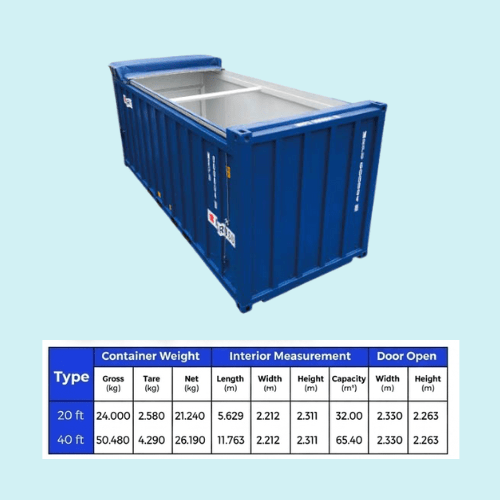
Open top containers are used when cargo cannot be loaded through standard container doors due to height or shape restrictions. Instead of a fixed roof, these containers feature a removable tarpaulin or hard cover, allowing cargo to be loaded from the top using cranes or lifting equipment. Open top containers are ideal for transporting heavy machinery, industrial equipment, steel products, and oversized cargo that exceeds standard container height limits. Their flexible loading capability makes them a reliable solution for specialized shipping requirements.
Flat Rack Containers
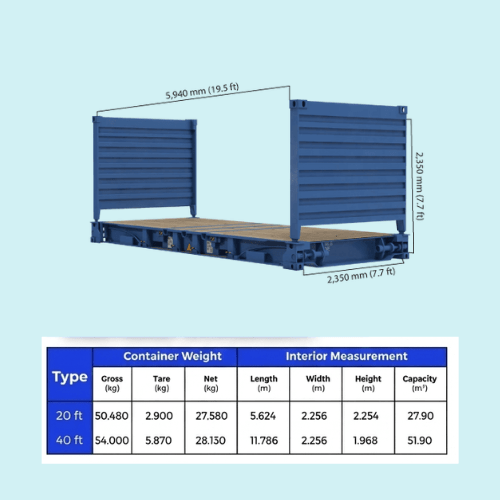
Flat rack containers are designed for cargo that is too wide, too heavy, or irregularly shaped to fit inside enclosed containers. These containers consist of a flat base with fixed or collapsible end walls, allowing cargo to be loaded from the sides or top. Flat rack containers are commonly used for transporting construction equipment, vehicles, large machinery, and project cargo. Their strong structure and high load-bearing capacity make them suitable for heavy-duty shipments that require secure lashing and specialized handling.
High Cube Containers
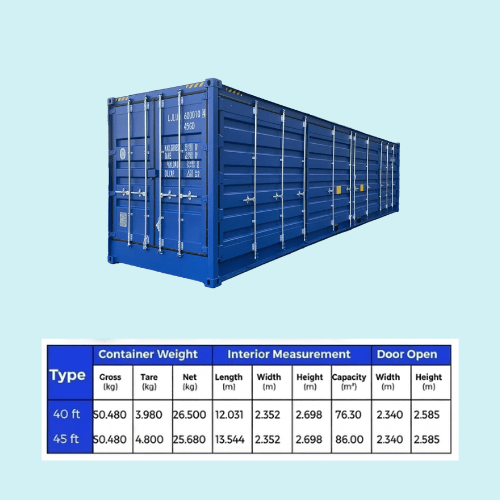
High cube containers are similar in design to standard dry containers but offer additional internal height, providing extra cargo volume. This additional space makes high cube containers ideal for transporting lightweight yet voluminous cargo such as furniture, automotive parts, retail goods, and bulk packaged products. Businesses often choose high cube containers when maximizing space efficiency is a priority, as they allow for better stacking and improved cargo utilization without increasing shipment footprint.
How to Choose the Right Container
Selecting the correct container depends on:
Cargo type
Weight and dimensions
Temperature requirements
Loading and unloading method
Transit route and duration
Why Container Selection Matters
Proper container selection:
Ensures cargo safety
Reduces transit risks
Improves cost efficiency
Complies with international shipping standards
Enables smooth customs clearance
How Ishana Shipping Helps
At Ishana Shipping, we assist clients in selecting the most suitable container type based on cargo specifications, destination, and transit requirements. Our expertise in global logistics ensures safe handling, optimal container utilization, and reliable delivery across international trade routes.